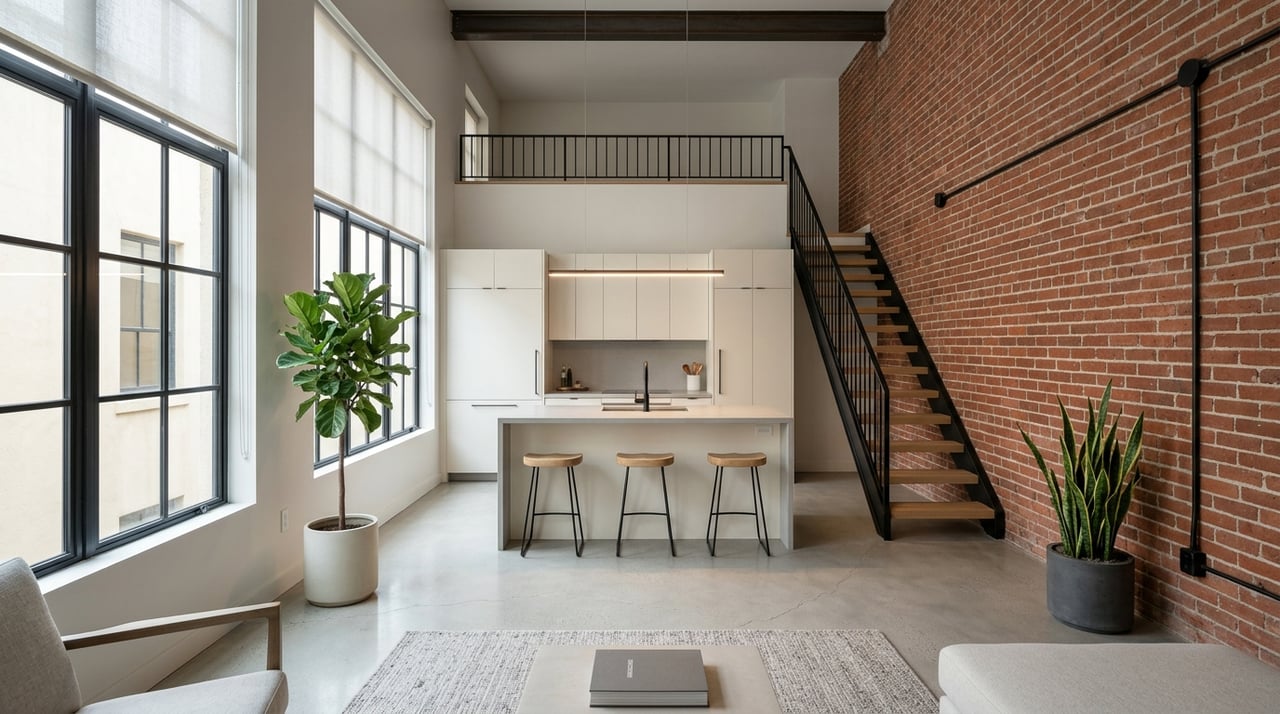
Trying to choose between a condo and a loft in the Mission District? In 94110, that decision is rarely just about style. You may be picturing open brick walls and tall ceilings, or you may want a more traditional layout with clearer separation between rooms. The better choice usually comes down to the block, the building, and the HOA details behind the listing. If you are weighing both options in the Mission, this guide will help you focus on what matters most. Let’s dive in.
Why the Mission changes the decision
In the Mission, the neighborhood context matters as much as the home itself. According to the San Francisco General Plan for the Mission, the area is a compact, mixed-use neighborhood with about 60,000 residents, roughly 17,000 housing units, and more than 23,000 jobs. That mix of housing, retail, transit, and daily activity shapes how a condo or loft actually lives.
The neighborhood also has several distinct corridors. SF Planning identifies Mission, Valencia, and 24th Streets as core pedestrian-scale commercial corridors, with 16th Street and the 16th and 24th Street BART stations serving as major transit nodes. In practical terms, that means your experience can vary significantly from one block to the next, even if two homes are only a few streets apart.
Condo vs. loft: start with the legal reality
A common mistake is assuming that a loft is one ownership type and a condo is another. In California, that is not necessarily true. The California Department of Real Estate buyer guide explains that ownership type is defined by law, not by architectural style.
So a home that looks like a loft can still legally be a condominium or another kind of common interest development. That is why the HOA documents, CC&Rs, budget, and disclosures matter more than the listing label. Before you decide based on aesthetics, make sure you understand what you are actually buying.
What usually defines a Mission condo
A condo often appeals to buyers who want a more conventional layout and an easier apples-to-apples comparison across buildings. In many cases, you will see clearer room separation, more standard building systems, and amenities or monthly dues that are easier to evaluate across similar properties.
That does not mean every condo in the Mission feels the same. Some are in newer mixed-use buildings near transit and shopping, while others sit on quieter side streets or face interior courtyards. The key benefit is often predictability: layout, circulation, and building operations may feel more straightforward during your search.
What usually defines a Mission loft
In the Mission, loft-style homes are often associated with adaptive reuse or buildings near former industrial edges and mixed-use transition areas. SF Planning’s Eastern Neighborhoods and Mission planning framework supports adaptive reuse of historic buildings and recognizes the neighborhood’s evolution from older industrial uses to a broader housing mix.
That often gives lofts a more distinctive architectural feel. You may find open volume, fewer interior walls, and design features that feel less conventional than a standard condo layout. If that character matters to you, a loft can be compelling, but it usually requires more careful diligence on sound, light, and HOA structure.
Noise is often the deciding factor
If you are shopping in the Mission, noise should be a front-burner issue. SF Planning notes that traffic is the most important source of environmental noise in San Francisco, and commercial areas can also add mechanical and freight noise. That matters a great deal in a neighborhood built around active corridors and transit access.
A unit facing Mission, Valencia, 16th, or 24th may feel very different from one that faces a courtyard or a lower-activity side street. The 16th/Mission corridor is especially active. SFMTA says the 14 and 14R Mission corridor carries nearly 46,000 passengers a day, which helps explain why some homes near major transit hubs feel more connected and more active.
That does not make one option better than the other. It simply means you should tour with your ears as much as your eyes. A loft with dramatic scale may still be the wrong fit if street activity, deliveries, nightlife, or transit noise will wear on you over time.
Light depends on the block, not the label
Buyers often assume lofts always have better light than condos, but that is not a reliable rule. In the Mission, natural light depends more on orientation, window placement, neighboring buildings, courtyard depth, and overall massing. SF Planning’s Mission guidance specifically addresses building form, setbacks, and the need to preserve light and air on smaller residential alleys.
That means you should evaluate light in person. Look at window size, the direction the unit faces, nearby building height, and how much privacy you actually have from adjacent windows. A well-positioned condo can feel brighter than a loft with impressive ceilings but limited direct light.
HOA documents may matter most
For many buyers, the real choice is not condo versus loft. It is strong HOA versus weak HOA. In California common interest developments, owners automatically become HOA members, and the association’s governing documents shape responsibilities, assessments, and rule enforcement. The California Attorney General’s HOA overview is clear on this point.
HOA dues are also more than a simple monthly expense. The DRE reserve and budget guidance explains that association budgets cover daily operating costs and long-term reserves, while special assessments may be used for major repairs or unexpected costs. Delinquent assessments can even lead to liens and, in some cases, foreclosure.
That is why a visually striking loft may be a weaker purchase than a simpler condo if the building has thin reserves, a murky assessment history, or restrictive CC&Rs. If you are choosing between two homes, the better-run building often wins.
Newer projects need extra review
If you are considering a newer condo or loft project, read the DRE public report requirements closely. These reports can disclose CC&Rs, assessments, adjacent uses, zoning issues, hazards, title conditions, and other material facts before you are obligated to close.
This is especially useful in a neighborhood as layered as the Mission. A polished sales presentation can highlight finishes and floor plans, but the public report helps you understand the legal and financial framework around the home. That context can protect you from surprises later.
Parking and transit can shift your answer
Parking is another area where the Mission’s location changes the analysis. On Valencia, the neighborhood commercial transit district does not require accessory residential parking, according to the San Francisco Planning Code. BART also notes that the 24th Street station area is active and that the station itself has no parking through the broader neighborhood context described in Mission planning materials.
If you do not rely on a car, that may not be a drawback. If parking matters to you, though, you should confirm whether it is deeded, leased, shared, or absent altogether. In the Mission, your transportation habits can strongly influence whether a given condo or loft feels practical.
A simple way to decide
If you want clearer room separation, a more conventional format, and easier comparison shopping on dues and amenities, a condo may be the better fit. If you value open volume, adaptive-reuse character, and a more architectural feel, a loft may be worth the trade-offs.
The Mission’s planning context supports both lifestyles. What matters most is whether the unit’s location, light, noise profile, and HOA health match how you want to live day to day. In this neighborhood, block-by-block evaluation usually tells you more than broad property labels.
What to ask on every tour
Use these questions to compare Mission condos and lofts more clearly:
- What does the monthly HOA assessment cover?
- Is there a recent reserve study?
- Are any special assessments expected?
- Can you review the CC&Rs, budget, meeting minutes, insurance certificate, and public report before removing contingencies?
- Which street, alley, or courtyard does the unit face?
- What are the main noise sources: traffic, transit, nightlife, deliveries, or building equipment?
- How do window placement, setbacks, and neighboring buildings affect daylight and privacy?
- If parking matters, is it deeded, leased, or unavailable?
- If the building is near 16th Street or 24th Street transit, are you comfortable with the activity level that comes with that location?
If you want help evaluating a specific Mission condo or loft, Frank Nolan offers experienced, high-touch guidance grounded in San Francisco block-by-block market knowledge. A thoughtful review of the building, the documents, and the location can make your decision much clearer.
FAQs
What is the main difference between a condo and a loft in the Mission District?
- In the Mission, the biggest differences are usually layout, building character, and how much diligence the property requires on noise, light, and HOA structure, not just the label in the listing.
Are lofts legally different from condos in California?
- Not always. The California Department of Real Estate says ownership type is defined by law rather than architectural style, so a loft-style home can still be a condominium.
How important is HOA review when buying a Mission District condo or loft?
- It is critical because HOA budgets, reserves, CC&Rs, and assessment history can affect your costs, responsibilities, and long-term ownership experience.
Do Mission District lofts have more noise than condos?
- Not necessarily, but noise is highly block-specific, and units facing major corridors like Mission, Valencia, 16th, or 24th may experience more street activity than courtyard or side-street units.
Does parking come with most condos and lofts in the Mission District?
- You should not assume it does, especially in transit-rich areas like Valencia or near BART, so always confirm whether parking is deeded, leased, shared, or not included.