Thinking about replacing windows in your Haight‑Ashbury Victorian? You want more comfort and efficiency without losing the character that makes your home special. This guide walks you through San Francisco permits, historic rules, energy code, costs, incentives, and a straightforward process that helps you avoid costly mistakes. Let’s dive in.
Start with your home’s status
Before you choose products, confirm whether your property has a historic designation. San Francisco’s rules are different for landmarked properties and homes in conservation districts. SF Planning’s window guidance explains how to check status and what documentation to bring so you do not buy the wrong product. Review the city’s detailed Standards and Recommendations for Window Replacement.
- If your home is a designated historic resource, expect design review of size, operation, profiles, and materials.
- If it is not designated, your material choices are generally broader, but you still need a permit and Planning review for street‑visible windows.
Permit rules in San Francisco
San Francisco requires a building permit for any window replacement, and Planning review when windows are visible from a public right of way. The Planning Department outlines a clear window‑project path and submittal checklist in its window standards and recommendations.
Many like‑for‑like swaps at the same size and location qualify for Over‑the‑Counter processing at the Department of Building Inspection. More complex changes, or work on designated historic properties, go to intake and administrative review. Check the DBI Over‑the‑Counter permits page for what to bring.
Materials and the recent code change
A recent Planning Code amendment generally prohibits the city from restricting replacement window materials on properties that are not historic. If your home is not a designated resource, you may choose from wood, clad, fiberglass, or vinyl for street‑facing windows. If it is historic, expect controls that prioritize historically appropriate materials and detailing. See Planning Code Section 136.2 for specifics: San Francisco Planning Code, Sec. 136.2.
Historic character and best options
Repair first
For original wood sash in Victorians, the National Park Service recommends a repair‑first approach when feasible. Repair retains historic fabric and can perform well with weatherstripping, sash cord repairs, and storm panels. Review NPS guidance in the Preservation Briefs.
If you replace, match what matters
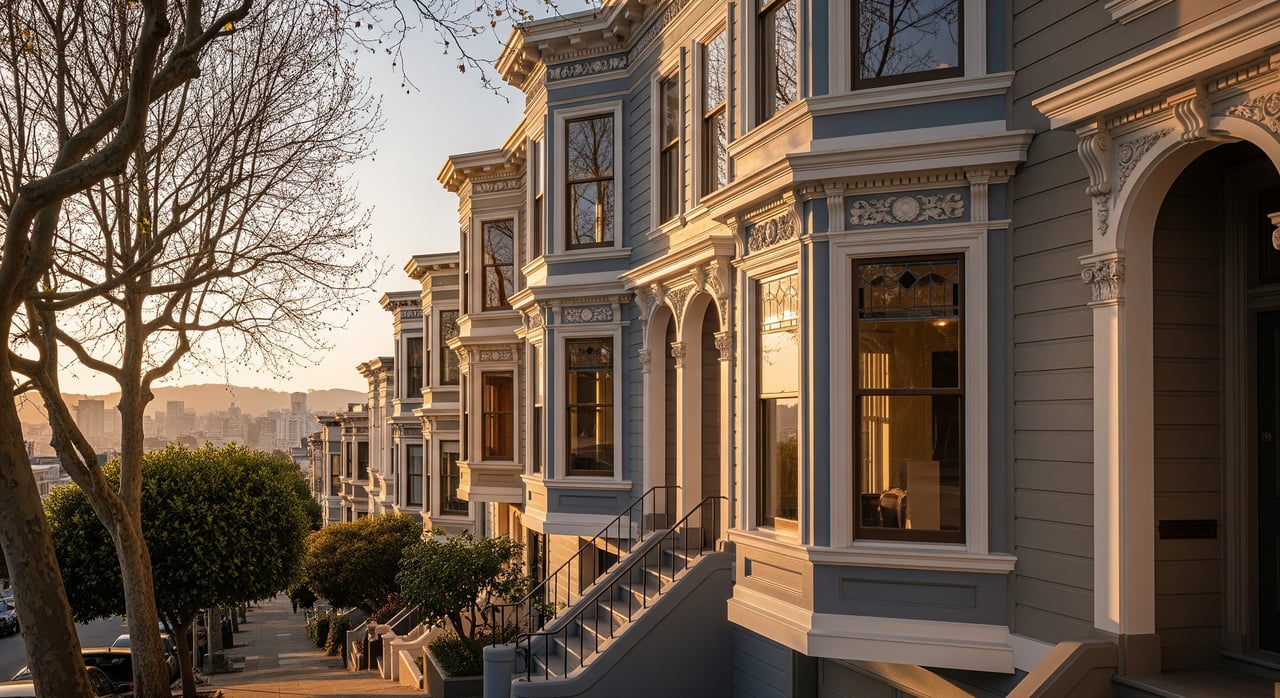
When replacement is necessary, match size and shape, sash proportions, muntin pattern and profile, depth of reveal, and operation type. SF Planning’s guidance encourages in‑kind repair where possible and close visual matching when replacement is needed. Bring product cut sheets with profiles and sightlines to your permit meeting.
Retrofit and storm options
Interior storm windows and removable interior panels preserve the exterior look and are reversible, which is a major plus for historic homes. Well‑fitted modern systems with low‑E coatings can meaningfully improve comfort and energy performance. Learn more from Building America’s guide to interior storm windows and panels.
Energy code and performance
Replacement windows must meet California Title 24 requirements. Inspectors look for NFRC labels that show U‑factor and SHGC ratings. The prescriptive residential U‑factor limit is typically around 0.30, and SHGC limits vary by climate and orientation. Plan ahead with the Title 24 windows overview.
A practical upgrade path for Victorians often looks like this:
- Air seal and repair existing sash, then add interior low‑E storms.
- If needed, consider high‑performance replacement sash that match historic details.
- For some homes, retrofit insulating glass into existing sash can balance efficiency with appearance.
Costs and incentives
Costs vary widely by window type, condition, access, and craftsmanship. In San Francisco, simple repairs or storms can be a few hundred dollars per opening, while high‑quality wood or custom historic‑match replacements often range from about $800 to $2,000 or more per window. Whole‑house projects can reach the tens of thousands. For typical ranges, see this market summary from Angi: How much do window repairs cost in San Francisco.
You may be eligible for limited tax credits. The federal Energy Efficient Home Improvement Credit offers a partial credit for qualifying exterior windows, capped at $600 in aggregate through December 31, 2025. Requirements and labeling matter, so save your documentation. Get current rules on the IRS credit page.
Regional programs evolve. BayREN’s new EASE Home and other offerings focus on weatherization and some income‑qualified support. Funding and eligibility change, so check updates before you plan your project. Start with BayREN’s EASE Home news.
Timeline and process
Like‑for‑like replacements can often be permitted Over‑the‑Counter in days if your documentation is complete. Administrative reviews for historic properties can take weeks or longer, depending on scope. To keep things moving, bring photos of each window and the streetscape, clear product cut sheets with profiles and NFRC data, and a concise description of each opening. SF Planning’s window standards and recommendations include what staff expect to see.
Important: Do not purchase windows before Planning confirms acceptability. If the product does not meet visual or material requirements, the city may not approve it.
Avoid common mistakes
- Skipping the historic status check and buying windows that will not pass Planning review.
- Missing critical details like sash sightlines, muntin profiles, and reveal depth on designated properties.
- Forgetting about Title 24 labeling. Inspectors expect NFRC labels at inspection.
- Underestimating access challenges on multi‑story facades that can add labor cost and time.
Quick homeowner checklist
- Confirm historic status with SF Planning, then photograph each window and the streetscape.
- Get quotes for both repair plus interior storms and full replacement.
- Verify Title 24 compliance and NFRC labels for any proposed products.
- Gather product cut sheets and prepare a concise scope for each opening.
- Visit the Permit Center to confirm Over‑the‑Counter eligibility before you buy. See DBI OTC permits.
Ready to plan improvements that protect your Victorian’s value and appeal to today’s buyers? Connect with Frank Nolan for neighborhood‑savvy guidance on timing, positioning, and market strategy for your Haight‑Ashbury home.
FAQs
Do you need a permit to replace windows in Haight‑Ashbury?
- Yes. San Francisco requires a building permit for any window replacement, with Planning review for windows visible from the street.
Can you use vinyl windows on a street‑facing Victorian?
- If your home is not a designated historic resource, material restrictions are generally not imposed. Historic properties remain subject to preservation controls that often require wood or visually compatible materials.
What if your original sash are in decent shape?
- Consider a repair‑first approach with weatherstripping and interior low‑E storm windows to boost comfort while keeping historic character.
What Title 24 documentation will inspectors check?
- Inspectors typically look for NFRC labels showing U‑factor and SHGC on each new unit, or equivalent documentation if labels are missing.
How long does permitting usually take?
- Simple like‑for‑like replacements can be approved Over‑the‑Counter in days, while historic reviews and scope changes can extend timelines to several weeks or more.
Are there tax credits for new windows?
- The federal Energy Efficient Home Improvement Credit allows a limited credit for qualifying windows, capped at $600 in aggregate through 2025. Rules can change, so confirm before you buy.