If you own a Haight-Ashbury Victorian, you are selling more than square footage. You are selling a piece of San Francisco’s architectural story in a market where buyers still move quickly for the right home. The challenge is knowing how to preserve what gives the property its identity while presenting it in a way that feels relevant to today’s buyer. This guide walks you through how to prepare, price, and position a 94117 Victorian with modern expectations in mind. Let’s dive in.
Why Haight-Ashbury character matters
Haight-Ashbury stands apart because its architectural identity is still unusually intact. According to SF Heritage, the neighborhood developed mainly in the 1890s and early 1900s, with buildings that are almost exclusively Queen Anne Victorian and very little construction before 1890 or after 1910.
That matters when you sell. In this part of San Francisco, period details are not just decorative touches. They help define the neighborhood and often shape how buyers compare one property to another.
SF Planning also describes Haight-Ashbury as a diverse residential neighborhood, a thriving commercial corridor, and an international tourist destination. For sellers, that means your home may appeal to buyers who want both architectural distinction and a well-known San Francisco address.
What the 94117 market signals now
The broader 94117 market remains expensive and active. Redfin reports a median sale price of $1,894,046 for 94117 over the three months ending April 2026, with homes selling in a median of 13 days and 67 homes sold in April.
Other market snapshots show slightly different numbers, but the pattern is consistent. Realtor.com reported 49 active listings in April 2026, a median list price of $1.395 million, and a median 40 days on market.
In Haight-Ashbury specifically, Redfin shows a median sale price of $2,199,183 over the last three months and a median 13 days on market. Realtor.com showed only 5 active for-sale listings in the Haight-Ashbury subarea of 94117.
These data sets use different timeframes and metrics, so they are best viewed as directional rather than identical. Still, they point to the same conclusion: inventory is limited, buyers are active, and well-positioned homes can attract strong attention.
Modern buyers still want authenticity
Today’s buyers often want comfort, function, and a polished presentation. In Haight-Ashbury, many also want a home that still feels true to its era.
That creates an important balance for sellers. The goal is usually not to strip out original character in favor of a generic remodel. The better strategy is often to present the home as well cared for, legally compliant, and visually coherent for current buyers.
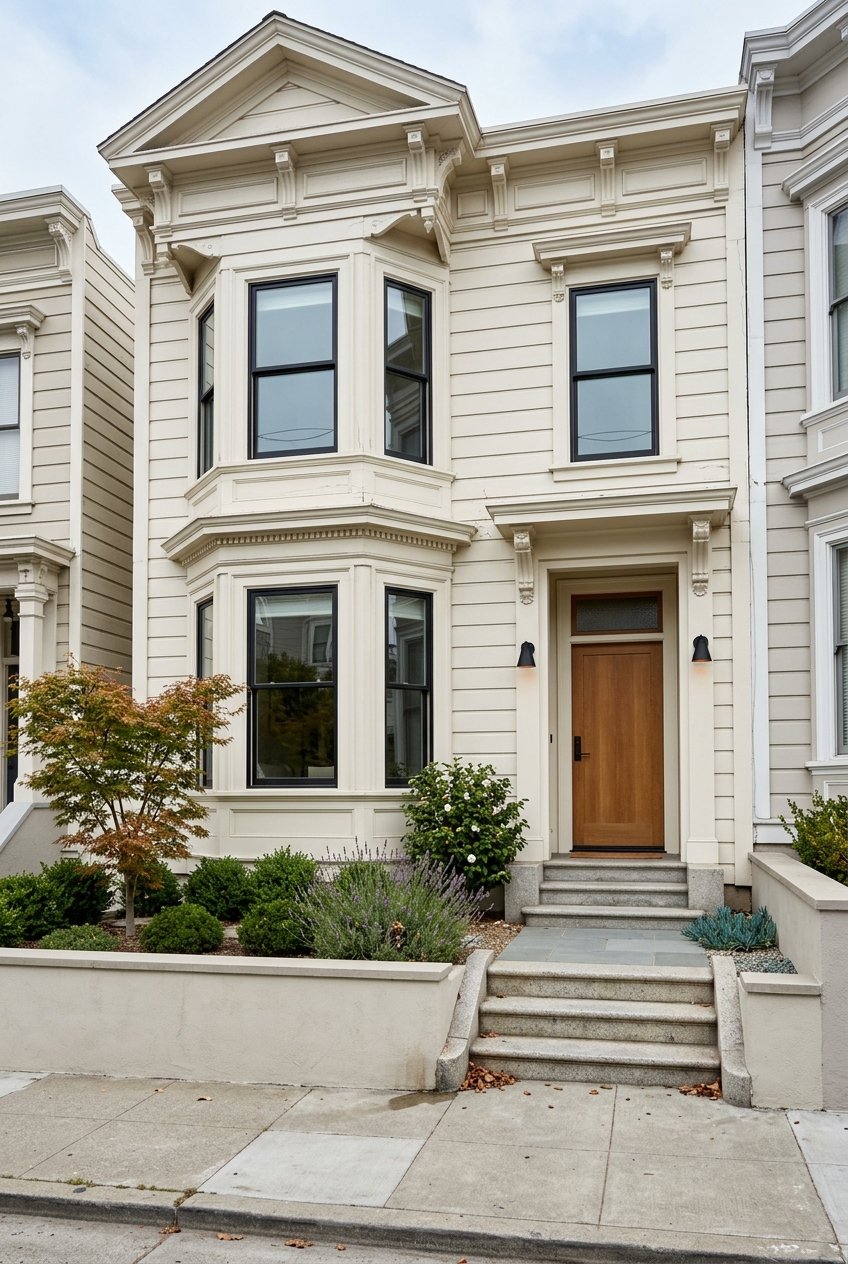
For many Victorians, that means emphasizing craftsmanship, scale, natural light, and restored detail while making sure the house reads as move-in ready. A thoughtful refresh can reassure buyers without erasing what makes the property distinctive.
Where to focus pre-sale improvements
If you are planning to sell within the next 6 to 18 months, the most practical upgrades are usually the ones that improve condition and buyer confidence without triggering unnecessary review. Based on SF Planning guidance and the local market, repair-first work often makes the most sense.
Start with the basics. Deferred maintenance, worn finishes, damaged trim, and visibly aging exterior elements can distract buyers and raise questions during disclosure review.
A smart pre-sale plan often includes:
- In-kind repairs to correct deterioration or damage
- Exterior touch-ups that preserve original details
- Interior refreshes that improve presentation without removing historic elements
- Organizing permits, invoices, and records for prior work
- Confirming any historic status before planning exterior changes
This kind of preparation can make the home feel easier to purchase. In a fast-moving market, clarity and confidence matter.
What sellers can usually do more easily
Not every improvement creates the same level of review. SF Planning says Certificates of Appropriateness are not required for ordinary maintenance and repairs done solely to correct deterioration, decay, or damage when replacement materials and details are in-kind.
That makes maintenance and true repair work the safest path in many cases. If you are replacing damaged material with matching material and preserving the existing design, you are generally on firmer ground than if you are redesigning visible exterior elements.
Paint is another area where sellers often have questions. SF Planning notes that paint color is generally not regulated, though unpainted masonry buildings in Article 10 Historic Districts may need a permit to be painted or stuccoed.
What can trigger historic review
Window work is one of the biggest areas where sellers can get into trouble if they assume too much. In San Francisco, a building permit is required for all window replacements, and windows visible from the street or another public right-of-way receive additional review.
SF Planning also advises owners to repair rather than replace historic windows when possible. If your Victorian still has original or older wood windows, repair may be the better path both for compliance and for preserving the home’s architectural appeal.
Exterior alterations can also trigger review. In Article 10 landmarks and Article 10 Historic Districts, a COA or ACOA is required before a building permit is issued for exterior changes. In some districts, even street-visible changes that otherwise would not need a permit may still require review.
That point surprises many owners. Even buildings rated Non-Contributory in a historic district still need a COA or ACOA.
Garages and additions need extra caution
If you are considering a bigger project before selling, such as adding a garage or expanding the home, proceed carefully. SF Planning warns that garage openings can negatively affect character-defining features such as front yard setback, bay windows, front porches, and historic fences.
Additions are also reviewed case by case. They must conform to the Residential Design Guidelines and the Secretary of the Interior’s Standards, which means design compatibility matters.
For most sellers on a near-term timeline, heavy exterior projects are rarely the first move. They can add cost, time, and uncertainty at a stage when focused preparation may do more to support value.
Original features worth repairing
In Haight-Ashbury, original details can help your home stand out. While residential interiors are generally not specifically designated under Article 10 or the California or National Registers, SF Planning still encourages retaining historic interior features where possible.
Features that may be worth repairing rather than replacing include:
- Original wood windows where repair is feasible
- Decorative trim and millwork
- Bay window detailing
- Front porches and historic fences
- Interior molding, built-ins, and other period craftsmanship
These elements help tell the property’s story. For modern buyers, they can add warmth and a sense of authenticity that newer finishes alone cannot recreate.
How to think about pricing
Pricing a Haight-Ashbury Victorian requires more than plugging in a zip code average. You need to weigh the broader 94117 market, the thinner inventory in Haight-Ashbury, the home’s condition, and the strength of its architectural presentation.
The current numbers provide useful guardrails. Redfin’s recent 94117 median sale price was about $1.89 million, while Haight-Ashbury’s recent median sale price was about $2.2 million.
That does not mean your home should automatically list at either figure. A seller with a well-preserved Victorian, strong curb appeal, and well-documented upkeep may be positioned differently than a seller with deferred maintenance or unverified work.
A practical pricing discussion usually looks at:
- Recent comparable sales in 94117 and Haight-Ashbury
- Street-by-street buyer perception and property presentation
- Extent of original character retained
- Quality and legality of updates
- Current inventory levels and competing listings
In a market where supply appears thin and buyer competition remains active, strategic pricing can do more than test the market. It can help create urgency.
Why documentation matters to buyers
Modern buyers do not just react to photos. They look for evidence that the home has been cared for and that any changes were handled properly.
Before listing, gather records that support the home’s condition and history. That can include permits, in-kind repair documentation, contractor invoices, and any materials that confirm whether the property has a historic designation.
If the home may qualify for the Mills Act, that is also worth investigating early. San Francisco says qualified historic properties can receive property tax relief, and the city runs an annual application cycle with a May 1 deadline.
Sellers should verify status through the SF Property Information Map or the California Historical Resources Inventory Database before starting exterior work. If your home has confirmed status or benefits, that can become part of how the property is presented to buyers.
Positioning your Victorian for today’s buyer
The best marketing for a Haight-Ashbury Victorian usually connects architecture, condition, and lifestyle in a clear narrative. Buyers want to understand not just what the house is, but why it matters.
That story should highlight the home’s original details, thoughtful care, and any updates that support daily living without compromising character. In a neighborhood known for architectural continuity, authenticity is part of the value proposition.
This is also where presentation matters. Professional photography, editorial-style marketing, and a smart launch strategy can help frame the home for buyers who value design and want a property with both presence and credibility.
For sellers in this segment, the goal is not simply exposure. It is reaching the right buyer with the right story at the right moment.
If you are considering selling a Haight-Ashbury Victorian, a tailored plan can help you protect character, avoid preventable missteps, and present the property with confidence. To start a confidential conversation, connect with Frank Nolan.
FAQs
What does the 94117 housing market look like for sellers in 2026?
- As of April 2026, 94117 remains a high-priced, active market. Reported data show fast median sale timelines, limited inventory, and continued buyer competition, with Haight-Ashbury showing especially tight for-sale supply.
Can you repaint a Haight-Ashbury Victorian before selling?
- Usually, yes. SF Planning says paint color is generally not regulated, but unpainted masonry buildings in Article 10 Historic Districts may need a permit before being painted or stuccoed.
Can you replace windows on a historic San Francisco home before listing?
- Window replacement requires a building permit in San Francisco, and street-visible windows get additional review. SF Planning advises repairing historic windows rather than replacing them when possible.
Can you add a garage to a Haight-Ashbury Victorian before selling?
- Maybe, but it is not a simple pre-sale project. SF Planning says garage openings can negatively affect character-defining features, and proposals are reviewed case by case.
Can you build an addition on a Haight-Ashbury Victorian without review?
- Not if the property is subject to applicable historic review. Additions are case by case, and exterior work in Article 10 landmarks and historic districts may require a COA or ACOA before a permit is issued.
Which original features should sellers preserve in a Haight-Ashbury Victorian?
- Features such as original windows, decorative trim, bay details, porches, fences, and interior millwork are often worth preserving or repairing because they support the home’s architectural identity and market appeal.
How should you price a Victorian home in Haight-Ashbury?
- Pricing should be based on current 94117 and Haight-Ashbury comparable sales, your home’s condition, retained character, quality of updates, and competing inventory rather than relying on one median number alone.
Should sellers disclose Mills Act or historic status for a San Francisco Victorian?
- If the property has confirmed Mills Act benefits or historic designation, it is wise to document and present that information clearly to buyers because it may affect both value and buyer understanding of the property.